
Why Fit and Fabric Matter More for Suits
Fit and fabric are the two most critical factors in any suit. They determine how the garment looks on your body, how comfortable it feels throughout the day, and how well it holds up over time.
Style choices, colour, and brand all play a role. But a high-quality suit in a poor fit will always look worse than a well-fitted suit in a more modest fabric. The reverse is equally true: a beautifully crafted wool suit in a poor cut still looks off if the fabric cannot breathe or drape correctly.
Understanding why both elements matter, and how they work together, is the difference between wearing a suit and actually looking good in one.
Why Fit Is the Most Important Factor in a Suit
A suit that fits well communicates confidence, professionalism, and personal style before you say a word. A suit that does not fit correctly undermines all of those things, regardless of what it costs or what it is made from.
Most men underestimate how much a poor fit affects the overall appearance of a suit.
Excess fabric bunches at the shoulders, gaps at the collar, or trousers that pool at the ankle are instantly noticeable. These issues cannot be hidden by fabric quality or brand name.
How the Right Fit Transforms Your Silhouette
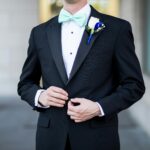
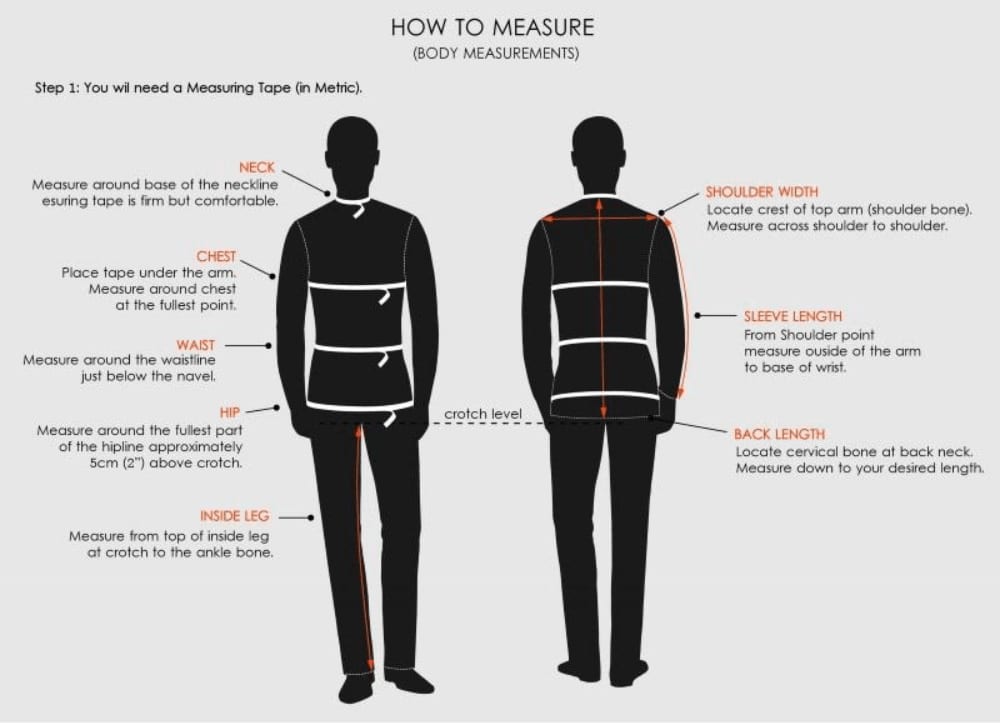
A well-fitted suit works with your body shape rather than against it. The shoulders sit cleanly without overhang or pulling. The chest closes without straining. The jacket waist follows the body’s natural line without excess fabric. The sleeve length sits just at the base of the wrist, showing around a centimetre of shirt cuff.
At the trouser, the break falls cleanly at the top of the shoe: not dragging, not cut short.
Together, these details create a clean, structured silhouette. The suit reads as intentional and polished, which makes an immediate impression in professional settings, at formal events, and at weddings.
What a Poor Fit Does to an Expensive Suit
An expensive suit in a poor fit does not look expensive. It looks like someone bought the right fabric but made the wrong choice on sizing.
Common problems include:
- Shoulder seams that sit beyond the edge of the shoulder
- A jacket collar that pulls away from the neck
- Excess fabric pulling across the chest when the jacket is buttoned
- Trouser legs that are too wide or too long for the body shape
- Sleeve length that is too short or covers the hand
Any one of these issues disrupts the overall silhouette. Combined, they make even a premium wool suit look like an off-the-rack purchase chosen in a hurry.
The Key Fit Checkpoints for a Suit
When assessing suit fit, focus on these areas in order:
- Shoulders: The seam should sit at the edge of the shoulder. This is the hardest area to alter and should be right from the start.
- Chest: The jacket should close cleanly with no pulling or gaping.
- Jacket waist: A slight suppression through the waist creates shape without restricting movement.
- Sleeve length: Approximately one centimetre of shirt cuff should be visible.
- Trouser break: A clean, single break at the top of the shoe is the standard.
- Trouser seat: Enough room to sit and move comfortably, without excess fabric gathering at the back.
Most off-the-rack suits require some level of alteration to achieve a tailored appearance. Sleeve shortening, trouser hemming, and waist suppression are all straightforward adjustments that significantly improve the overall look.
Why Fabric Quality Matters for Long-Term Performance
Once the fit is right, the fabric determines how well the suit performs. It affects breathability, structure, drape, and how the garment holds its shape through extended wear.
A suit worn to a wedding, a business meeting, or a black tie event needs to look as sharp at the end of the day as it did at the start. Fabric quality is what makes that possible.
The Case for Natural Fabrics
Natural fibres outperform synthetic materials in almost every practical measure for suit fabric.
Wool suits are the benchmark for good reason. Wool is naturally breathable, regulates temperature effectively, and drapes well against the body. It holds its shape throughout the day, resists wrinkling better than most fabrics, and improves with wear as it moulds slightly to the wearer’s body over time.
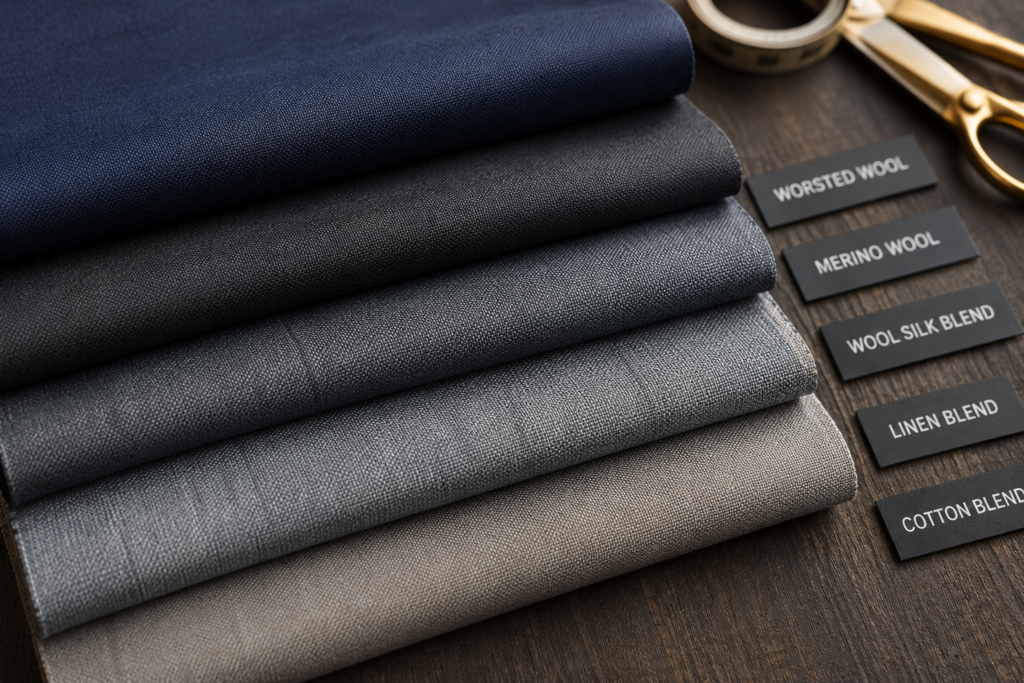
Worsted wool is the most common suit fabric for formal and business suits. It has a smooth, clean surface, a consistent drape, and strong wrinkle resistance. It suits year-round wear and handles both formal occasions and everyday use.
Merino wool is finer and softer than standard wool, making it a strong choice for premium pure wool suits. It is comfortable against the skin for extended wear, breathes well, and has a refined, slightly luxurious appearance.
Wool silk blends are among the most luxurious fabrics, adding a subtle sheen and smoother drape that make them well-suited to black tie events and evening wear where a more elevated finish is appropriate.
Linen suits and linen blends are ideal for warm weather. Pure linen is lightweight and naturally breathable, which makes it the right fabric choice for summer weddings and warmer climates. It does wrinkle more readily than wool, which is part of its character in casual and relaxed settings.
Cotton suits and cotton blends sit between formal and casual. They are comfortable and breathable for everyday wear but lack the structure and drape of wool for formal occasions.
Understanding Fabric Weight
Fabric weight directly affects how a suit behaves and what occasions it suits.
- Lightweight wool blends (around 200-250g/m²) are ideal for warm weather and summer events. They breathe well but offer less structure.
- Mid-weight wool (around 270-320g/m²) is the most versatile fabric for year-round wear. It holds its shape, drapes cleanly, and works across business suits, weddings, and formal events.
- Heavier fabrics above 320g/m² provide more warmth and structure, suited to cooler weather and winter occasions.
Fabric weight also affects how forgiving a suit is. Heavier fabrics conceal minor fit imperfections more effectively than lighter fabrics, which reveal the body’s shape more closely. This is relevant when selecting fabric alongside fit.
Why Synthetic Fabrics Fall Short
Polyester suits and high-content synthetic blends come with a consistent set of problems for formal wear.
Synthetic materials are less breathable than natural fibres, which creates discomfort during extended wear. They tend to look shinier under lighting, which reads as lower quality. They are also more prone to retaining heat and losing shape through the course of a day.
Wool polyester blends can be a reasonable midpoint if the wool content is high enough, typically above 60%. Below that threshold, the suit begins to behave more like a synthetic fabric than a natural one, losing much of what makes wool suits worth wearing.
For formal occasions, business suits, and any event where appearance matters from morning to evening, natural fabrics are the more reliable choice.
How Fit and Fabric Work Together
Fit and fabric are not independent variables. They interact with each other and affect the final result of how a suit looks and performs.
Heavier, more structured fabrics like worsted wool or mid-weight wool blends have more inherent drape. They hold their shape across the shoulders and chest, which helps conceal minor variations in fit. A suit in this type of fabric can look sharp even with small imperfections.
Lighter fabrics such as linen or cotton blends follow the body more closely. They are less forgiving of fit issues because the fabric behaves in a way that reveals the body’s shape rather than shaping around it. When wearing lighter fabrics, fit precision matters even more.
This is why a proper fitting is important when selecting suit fabrics, not just the suit itself. The right fabric for the occasion and the right fit for the body shape are decisions that should be made together.
Find the Right Suit at Penguins Formal Wear
Whether you are preparing for a wedding, a black tie event, a formal occasion, or building out your professional wardrobe, getting the fit and fabric right is where a great suit starts.
At Penguins Formal Wear, Perth’s most extensive range of suits is available to hire or buy, with expert fitting to ensure every suit leaves looking exactly as it should. Our team will guide you through fabric options, suit fit, and styling for any occasion.
Browse our suit range or book a fitting at our store today.