
What Does Wearing a Suit Show?
Wearing a suit immediately shows competence, authority and attention to detail. So what does wearing a suit show beyond that first impression? It signals respect for the occasion, effort, and a quiet sense of self-assurance, and research even suggests that putting on a suit changes how you think, encouraging more big-picture, confident decision-making.
The exact message depends on the setting. In professional settings, a suit shows ambition and commitment. At formal events, it projects elegance and tradition. In everyday style, it can communicate individuality and leadership because you are choosing to stand out.
Because a suit frames your posture and carries instant symbolic power, fit is everything.
A sharp, tailored suit highlights discipline and readiness, while an ill-fitting one can read as careless.
What a Suit Shows in Different Settings
The same suit can say very different things depending on where you wear it.
In Professional Settings (Interviews and Meetings)
In business, a suit shows respect, ambition and a high level of commitment to the role. It tells people you take the task and the meeting seriously, and wearing a suit is often interpreted as a sign of preparation and effort.
A suit is appropriate for job interviews and formal events, and wearing a suit conveys a respectable image during a job interview. In a business environment, it also conveys competence, respect and attention to detail, which is why business suits still signify traditional standards of professionalism.
A few facts worth knowing about the office:
- Only around 10% of workers wear a suit to work today.
- Suits have been the standard office attire since the 1960s.
- The suit is considered the gold standard for high-stakes meetings in the CBD and corporate offices.
- Wearing a suit can even improve your chances of getting a raise.
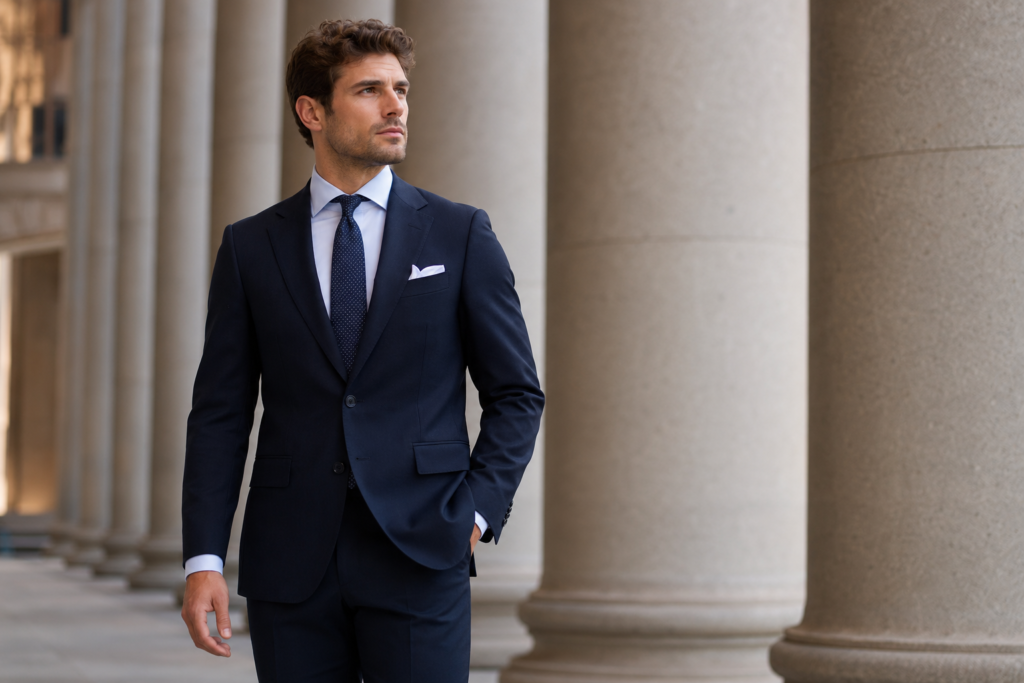
A navy suit or dark suit, paired with a crisp dress shirt, is what most men reach for when the dress code calls for polish.
At Formal Events and Special Occasions
At formal events and special occasions, a suit projects elegance, celebration and tradition. It shows you recognise the importance and formality of the moment, whether that is a wedding, a black-tie dinner or another milestone.
The right outfit signals respect for the gravity of a situation. A black suit suits evening and black tie, while navy works across the board. Finishing touches like pocket squares, a well-chosen tie and the right accessories show you have thought about the occasion, not just turned up to it. The same care creates a great first impression in any setting, even something as simple as shopping.
In Everyday and Casual Settings
Worn day to day, a suit communicates individuality, leadership and high self-respect, because you are intentionally standing out from the crowd. In a world of T-shirts, jeans and casual attire, choosing a nice suit as your everyday style is a deliberate move.
You do not have to go full formal. Dress pants with a suit jacket, or a new suit worn without a tie, blur the line into business casual while still setting you apart from what people typically wear.
The Psychology Behind Wearing a Suit
A suit changes how others see you and how you see yourself. Formal attire lifts perceptions of status and success, and studies suggest it nudges your own brain towards more abstract, big-picture thinking. Wearing a suit can increase your confidence at work, which is part of why so many men reach for one before a high-stakes moment.
The effect is strongest when the garment fits. A tailored suit can increase feelings of authority and confidence in the wearer, and a well-fitted suit projects authority, leadership and decisiveness. There is even a measurable payoff, with well-dressed workers earning more on average than their poorly dressed counterparts.
Worn well, a suit becomes a statement about how seriously you take your appearance and your work.
Why Fit Is Everything
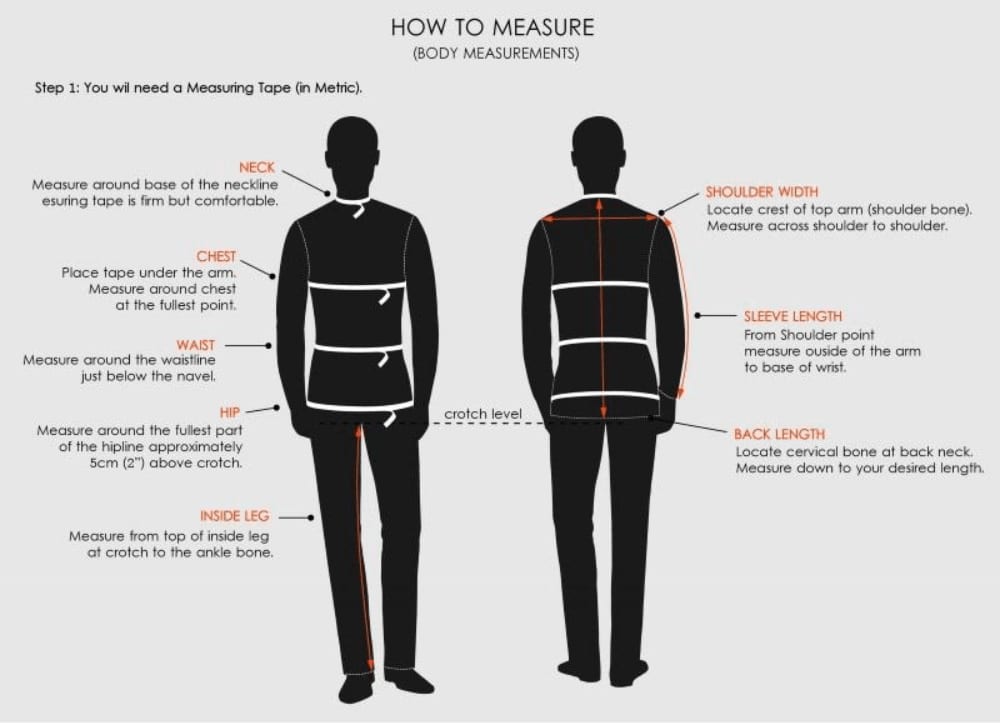
A suit only sends the right message when it fits, so this is where a tailored suit pays off.
A sharp look comes down to a few details:
- The shoulders should sit flat, and the collar should hug your neck with no gap.
- The lapel should lie soft against your chest, and the jacket should hang cleanly from the frame.
- Your shirt cuff should peek just below the jacket sleeve length, and a point collar frames the tie neatly.
- On a single-breasted jacket, fasten the top button or middle button and leave the bottom button undone.
- Trousers want a natural waist, the right trouser width, and just a slight break over your black shoes.
- Socks should match your trousers, not your shoes.
Button your jacket when you stand and unbutton it when you sit, and the suit will look sharp from every angle.
Suit Styles and What Each One Signals
Different cuts and colours send different messages, so choose the style that matches the occasion:
- Navy suit: versatile and approachable, the everyday workhorse for business.
- Dark suit or black suit: formal and authoritative, ideal for black tie and evening.
- Three-piece suit: polished and traditional, adding a layer of formality with the waistcoat.
- Double-breasted: bold and fashion-forward, a real statement piece.
- Lighter tones and other colours: relaxed and seasonal, leaning into current fashion trends.
Whichever clothing you choose, the cut should flatter your build. A great pair of shoes, a matching belt and tidy accessories complete the look.
Find Your Next Suit! Visit Penguins Formalwear Today!
A suit shows competence, respect and confidence, but only when the fit and the setting are right. Whether you need a sharp business look, a wedding outfit or a custom piece for a special occasion, the team at Penguins Formalwear can help you find a suit that fits beautifully and sends the right message.
Contact us or visit in store or online to find your next suit and wear it with confidence.