
How High Should My Suit Pants Be?
Suit pants should sit high on your waist, typically at or just below your belly button. Unlike casual jeans, which hang low on the hips, proper dress trousers need a higher rise to create a balanced silhouette and make your legs look longer.
It is a small detail with a big effect. Fit shapes first impressions, and a pair of well-fitting trousers lifts the overall appearance of any suit.
Where Your Suit Pants Should Sit
Most men are used to wearing jeans on the hips, so suit trousers can feel high at first. That is exactly the point.
At Your Natural Waist
The top of the waistband should rest right around your navel, or about one finger-width below it. This is your natural waist, and it is where suit trousers are designed to sit.
They should sit comfortably without slipping, and without relying on a belt to hold them up. If the trousers only stay in place because the belt is pulled tight, the waist is the wrong size.
Pleated Trousers Sit Higher
If your suit pants have pleats, wear them higher on the true waist. Worn low, the pleats splay open, and you end up with odd fabric folding across the front.
Pleats give extra room through the seat and help the trousers drape better when you sit. Pleated, high-rise trousers also pair naturally with braces, which hold that higher line all day.
Mid-Rise and Modern Slim Suits
Some modern slim suits feature a mid-rise that sits slightly lower, on the upper hip bone. It suits a sleek, fashion-forward look and a more modern silhouette.
That is fine, but there is a limit. Mid-rise suit trousers should never sag or ride as low as casual denim.
How Long Should Suit Pants Be?
Getting the height right at the waist is only half the job. The other half is trouser length, which comes down to the break.
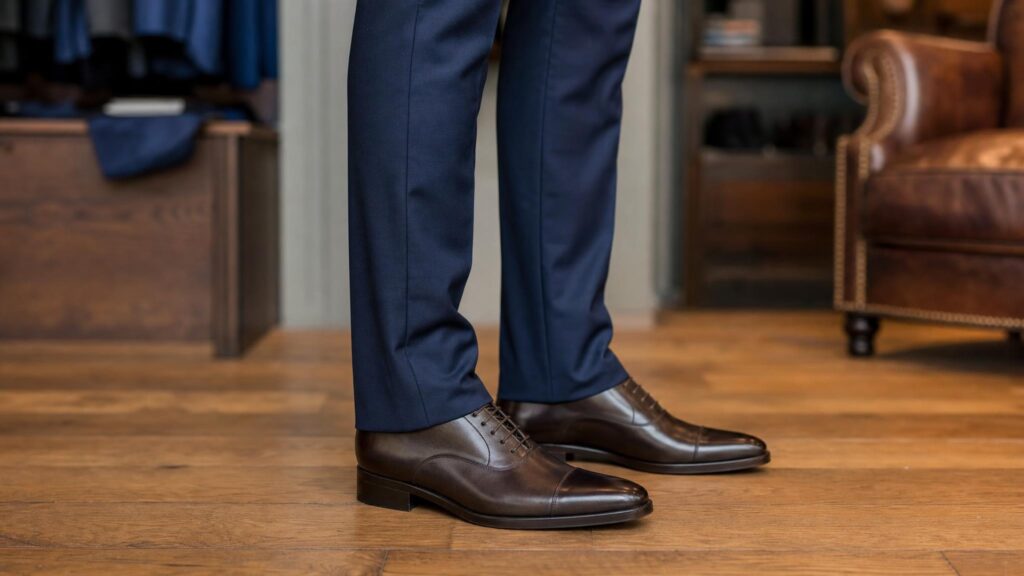
The break refers to how much the pant leg bends or creases where it meets your shoes. A clean break sharpens the whole silhouette, while too much fabric at the ankle makes even a good suit look borrowed. There are five main break styles.
No Break
The hem barely touches the shoe, creating the sharpest, cleanest line. It suits slim, tapered trousers and a sleek, modern look.
Slight Break
Also called a quarter break, this creates a soft, small crease at the front of the shoe. It is the most versatile trouser length and the safest choice for professional wear, which makes it ideal for a job interview or the office.
Half Break
Half break trousers lightly fold over the shoe in one clean fold. It is a classic choice for traditional corporate settings and works on most body types.
Full Break
A full break has significant fabric folding over the shoe. It is traditional and relaxed, and it suits taller men and wider classic-fit trousers, but extra fabric can look sloppy on a slim cut.
Cropped
Cropped trousers end above the ankle, exposing the sock. It is a fashion-led look that works with loafers on a warm Perth day, but it is not one for corporate or formal occasions.
Choosing the Right Break for Your Height
Your height and body shape are the best starting points. From there, personal style and personal preference can take over, along with the occasion. A wedding or the races allows more freedom than a boardroom, where a slight or half break is the safest style advice we can give.
| Height | Recommended Break |
| Under 168 cm (5’6″) | No break or slight break |
| 170 to 178 cm (5’7″ to 5’10”) | Slight or half break |
| 180 to 188 cm (5’11” to 6’2″) | Half or full break |
| Over 188 cm (6’2″) | Full or half break |
Shorter men benefit most from less break, because extra fabric pooling at the ankle cuts the leg line short.
If you are unsure, our guide to choosing a suit for your body shape is a good next read.
Why the Rise Matters
The rise is the distance from the crotch seam to the top of the waistband, and it changes more than most people realise.
- Proportions. A higher rise lengthens your lower body and shortens your torso visually. Shorter men in particular gain the most from it.
- Tucked shirts. Your dress shirt stays securely tucked in, rather than popping out every time you move or sit.
- Comfort. Sitting at the natural waist stops the waistband cutting across your stomach.
The seat and crotch seam matter too. You want enough room to move without restriction, but nothing overly baggy and nothing tight.
Our suit fitting guide covers what to look for from waist to hem.
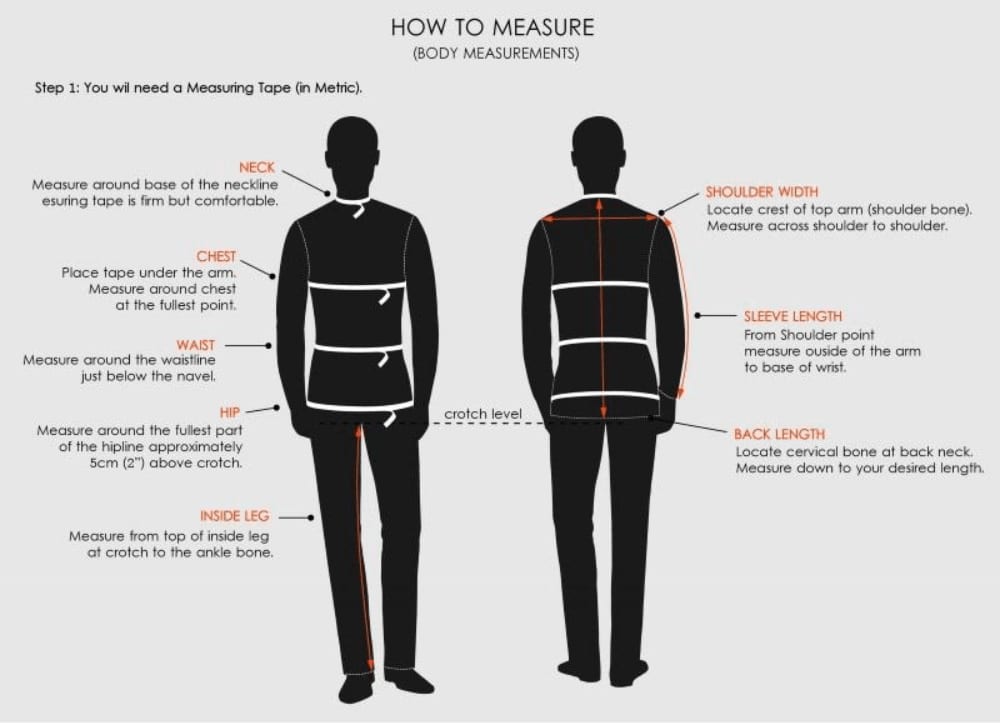
How to Measure for the Correct Trouser Length
The correct trouser length starts with the right shoes. Always measure while wearing the dress shoes you will actually wear with the suit, because heel height and shape change where the hem falls. If you are still deciding, here is what shoes to wear with a suit.
There are two measurements to take:
- Inseam: from the crotch seam down to the hem.
- Outseam: from the top of the waistband down to the hem.
Let the tape follow the natural line of your leg rather than pulling it straight. Then have the trousers hemmed while wearing those same shoes.
Need More Help with Your Trousers? Reach Out to Penguins Today!
Getting the rise, length and break right can be tricky to judge on your own, and that is where we come in.
Our team at Penguins can fit your suit trousers properly, from the waist down to the hem, so everything sits the way it should.
Come into our shop or get in touch today, and we will help you find a pair that fits well and looks sharp.